We’ve Raised $120M to Close the Outer Loop of the SDLC with a Superintelligent AI SRE

When we started Traversal, we believed AI could fundamentally change how software operates in production. Getting there would require rethinking how AI understands complex systems and reasons about why they fail.
Today, that challenge is becoming more urgent than ever.
Coding agents have transformed the "inner loop" of the software development lifecycle (SDLC). A recent survey found 42% of developers now use AI to write a majority of their code, up from 12% last year. The catch is 52% now are spending more time debugging the code once it hits production and interacts with the larger system.
Enterprises bought coding agents expecting faster delivery and leaner engineering costs. But more code has meant more complexity to manage, and more opportunities for software reliability issues and incidents. Unplanned outages cost Global 2000 companies a combined $600 billion in 2026, up 50% in two years. And production's growing complexity demands more and more engineering time just to understand and maintain it, eroding the ROI of AI-assisted development.
Today, we're announcing $120 million in Series B funding at a $1 billion valuation to accelerate our work toward self-driving production, closing the loop between writing code and keeping it running. The round was co-led by Kleiner Perkins, Redpoint Ventures, and Khosla Ventures, with significant participation from Sequoia and Battery Ventures. And we’re proud that Kleiner Perkins and Sequoia doubled down on earlier investments.
Rethinking how AI understands production
Three of us came to Traversal from academic research in causal machine learning and reinforcement learning, at MIT, Berkeley, Columbia, and Cornell. We'd spent over a decade studying how machines can learn cause and effect from complex data.
As we explored where that research could have the greatest real-world impact, software reliability stood out. In particular, incident root cause analysis, one of the hardest problems in applied AI, carries immediate stakes for financial institutions, healthcare systems, critical infrastructure, and really any organization where engineers urgently need to know why a system went down, and more importantly, how to fix it.
At its core, investigating an incident is a causal reasoning problem. Thousands of things happen at once, and engineers must isolate the specific chain of events behind a failure. It's like finding a needle in a haystack... except the haystack is filled with fake needles.
Two challenges stood in the way of AI doing this reliably.
First, production data wasn't built for AI agents. Observability tools serve humans looking at dashboards: fixed views, narrow queries, and only as much data as a person can read. Agents need to query flexibly and at a far larger scale, pulling huge volumes of logs, metrics, and traces and connecting them to services, infrastructure, code, and changes as an investigation unfolds.
Second, correlation isn’t causation. LLMs learn what tends to occur together, not what causes what. When an incident fires dozens of signals at once, a model picks the most plausible-sounding story and mistakes correlation for cause. Root-causing requires real hypothesis testing: ruling things out, checking the timing, and reconstructing the causal path through the dependency graph.
At enterprise scale, both get harder: petabytes of telemetry across thousands of constantly changing services, with context scattered across code, deployment histories, incident records, and tribal knowledge.
As Alex Palcuie, SRE Lead at Anthropic, put it:
"We can't trust LLMs for incident response… The problem is its inability to step back and start discerning between causation and correlation... For us humans, it is hard as well."
It took nearly two years of research and engineering to build the foundation to solve these problems, culminating in the formal introduction of our Production World Model and Causal Search Engine in March 2026.
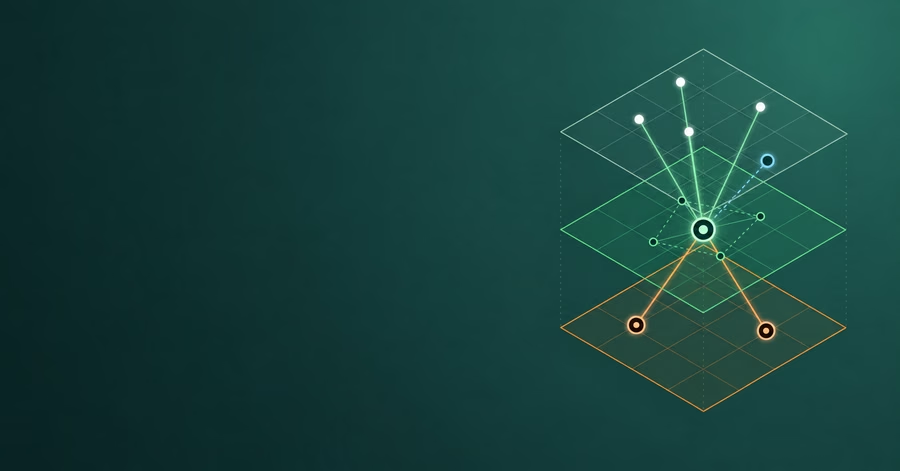
Our Production World Model solves the first challenge, turning raw telemetry, code, deployment history, and tribal knowledge into a continuously updated, AI-readable representation of production.
Our Causal Search Engine solves the second, letting agents test thousands of hypotheses in parallel, follow causal relationships across systems, and converge on evidence-backed root causes.
Since these breakthroughs, adoption has accelerated dramatically. This year alone, monthly investigations have grown more than 100-fold, from 513 to nearly 73,000.

The Claude Code moment for SRE & IT operations
We deliberately started with root cause analysis because it's one of the hardest challenges in production, requiring AI to understand complex systems and reason reliably about cause and effect. Solving it laid the groundwork for much broader applications, while giving customers a concrete, measurable way to evaluate Traversal's accuracy. With that confidence, they began trusting Traversal with more open-ended reliability and production engineering questions, where the answers aren't always as easy to verify.
Roughly two-thirds of usage now extends beyond root cause analysis into areas including alert triage, release risk, CMDB validation, security, customer journey health, and production support questions.
As one infrastructure leader said about Traversal, "the Claude Code moment for SRE has finally arrived," capturing how engineers can now put that intelligence to work across an expanding range of use cases.

As that trust grows, the next step is giving AI a more active role in production. That's why we built Traversal Workers: proactive, long-running agents that work alongside engineering teams. Instead of waiting for an engineer to start an investigation, Workers get to work the moment any sort of anomaly triggers (e.g., incidents, alerts), gathering context, identifying root causes, and helping drive remediation. That means less lost time, fewer engineers pulled in, and faster recovery. With Traversal MCP, we're also feeding that production intelligence back into development. Coding agents can tap Traversal's live understanding of production to ship more resilient code and prevent incidents before they happen.
Our vision: Self-driving production
We've always viewed root cause analysis as the starting point. With Traversal now proactively investigating incidents and supporting a growing range of operational decisions, we're moving toward our broader ambition of self-driving production: software systems that autonomously detect issues, understand their causes, take appropriate corrective action, verify that those actions worked, and prevent issues from happening in the first place. That is, closing the outer loop of the AI-native SDLC.
This funding will help us push that work further by hiring top talent across research, engineering, and go-to-market to expand the capabilities of our AI SRE and move toward increasingly autonomous production operations.
We're grateful to the customers who have trusted us with their most critical production systems, to our investors for believing in our vision, and to our team for everything they've poured into building Traversal.
Anish Agarwal, Raaz Dwivedi, Raj Agrawal, and Ahmed Lone
Cofounders, Traversal

Traversal Now Sees Your AWS Stack: Introducing CloudWatch and AWS Account Integrations

How Can You Effectively and Efficiently Monitor Distributed Systems?